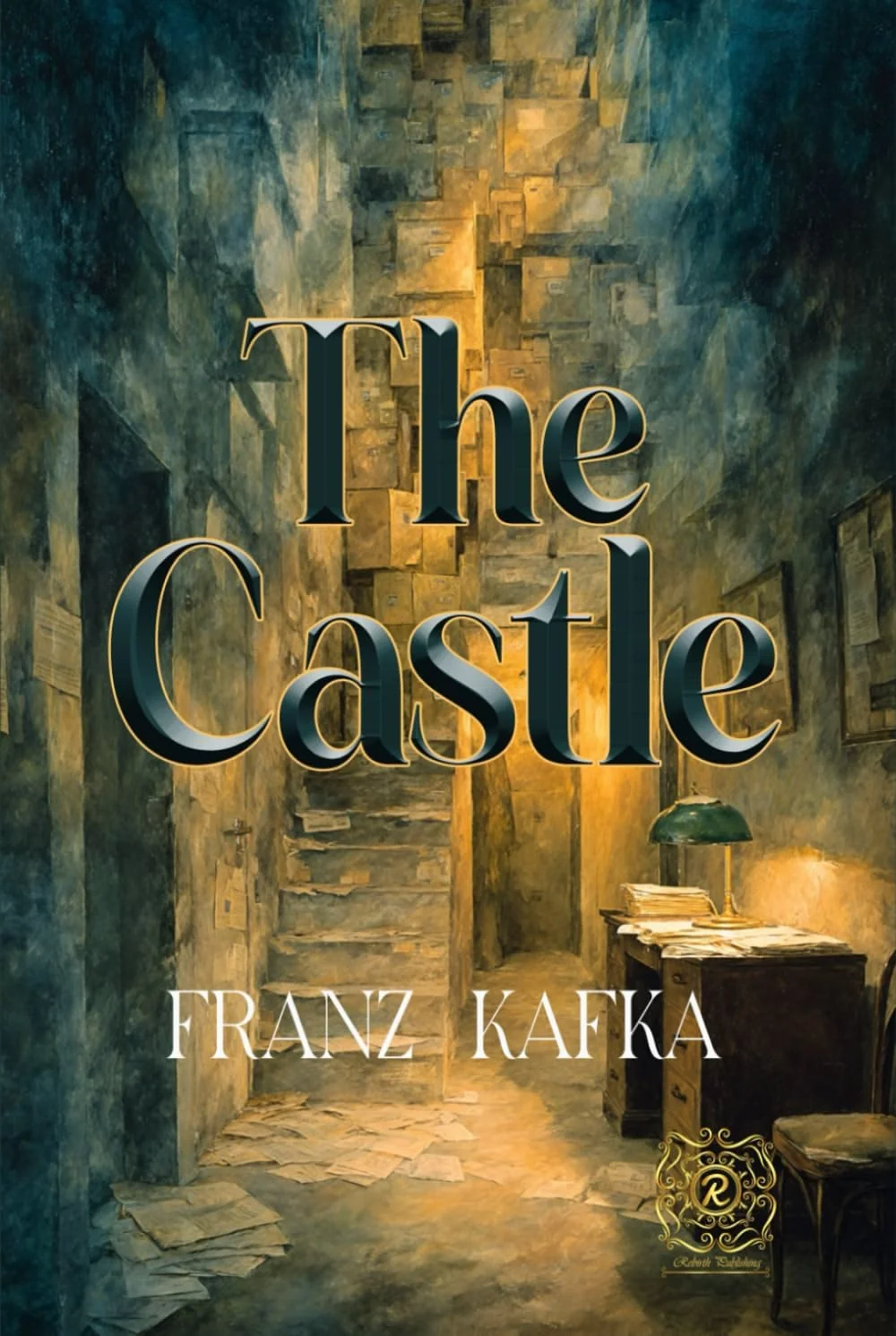
Franz Kafka's unfinished novel The Castle follows K., a man who arrives in a village dominated by a distant castle and claims to have been summoned there as a land surveyor. Though he is determined to gain access to the authorities who govern the village, he finds the castle's bureaucracy elusive, contradictory and impossible to pierce, and every attempt to reach its officials leads him into a maze of messages, intermediaries and half-promises.
Written in the years before Kafka's death in 1924, the novel is a haunting study of alienation, authority and the frustrations of trying to belong within an opaque system. Its dreamlike logic and quiet, persistent tension have made it a central text of modern literature.
Readers who enjoy philosophical fiction, existential themes and the unsettling atmosphere of Kafka's work will find much to reflect on here, as will anyone curious about the origins of the adjective "Kafkaesque."