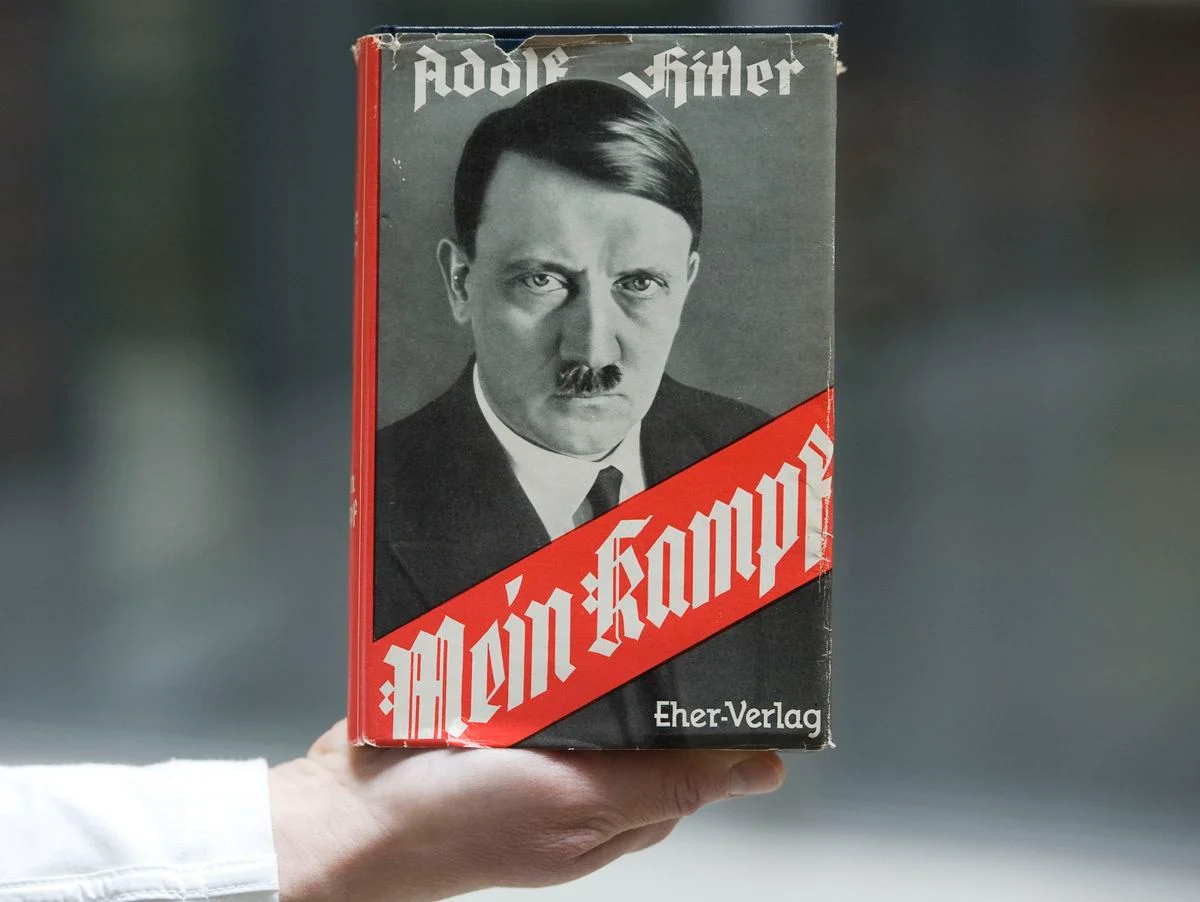
Mein Kampf was written by Adolf Hitler, the leader of the Nazi Party, and first published in two volumes in 1925 and 1926. Part memoir and part political manifesto, it traces the author's early life in Austria and Germany, his years as a soldier in the First World War, and the ideological views that shaped his rise to power. Its pages set out his racial theories, his hostility toward Jews and Marxism, and his plans for territorial expansion, presenting these ideas as the foundation of a movement he sought to build.
The book is a historical document rather than a work of literature, and its arguments are propaganda that has been thoroughly discredited. Readers today most often approach it through history, political science, and the study of extremism, where it is read alongside scholarly commentary that explains its context, distortions, and consequences. Students, historians, and general readers interested in how the Nazi ideology was formed will find it valuable when read critically.
Because the text is written in a dense and often rambling style and contains hateful and false claims, many editions include annotations or introductions from historians to guide the reader. Such editions are the most useful choice for anyone wanting to understand the book's place in twentieth-century history.